Masonry
Brick, mortar, and the roof joint
Masonry chimneys move with freeze-thaw cycles and roof runoff. Knowing how joints, crowns, and flashing work together helps you describe damage without guessing at structural fixes.
Joints and courses
Head and bed joints hold courses together. Recessed or missing mortar lets water wick into brick — especially on sun-facing stacks that cool quickly at night.
- Repointing vocabulary — Matching mortar color and hardness matters on older homes; aggressive Portland mixes can trap moisture.
- Spalling — Flaking brick faces often trace back to years of wetting and drying at the crown line.
Crown and cap
The cast crown sheds water away from the flue tile. Splayed edges and drip grooves are deliberate details — hairline cracks deserve photos and a mason’s opinion, not a DIY seal without context.
Flashing and roof wear
Step flashing follows the roof pitch; counter-flashing is cut into the stack. Stains on attic sheathing near the chimney may point here rather than at the liner.
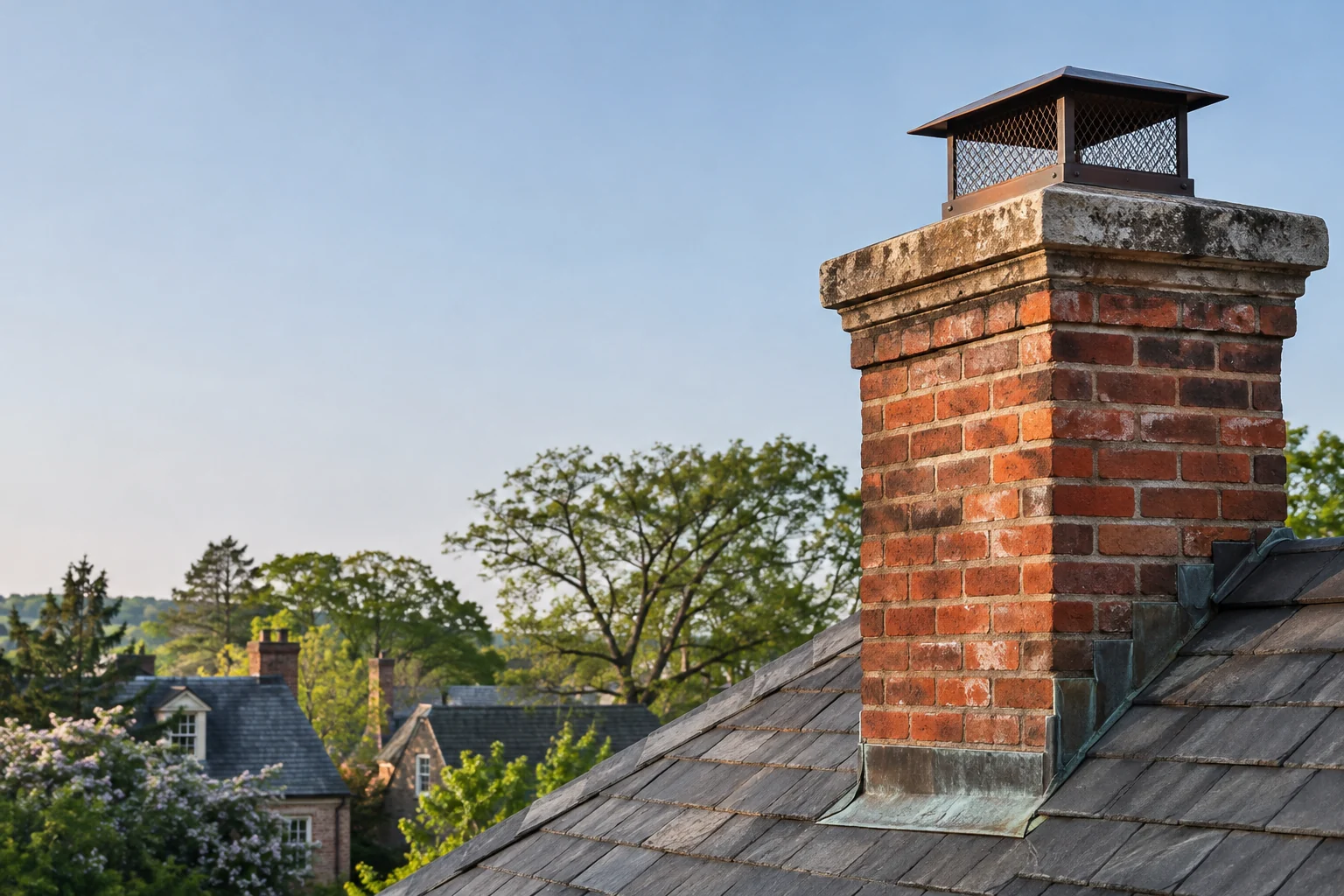
Water paths
Wind-driven rain, ice dams, and capless flues all leave different marks on brick. Document seasons when stains appeared — that timeline helps trades prioritize work.